Red Octopus Texture and Color
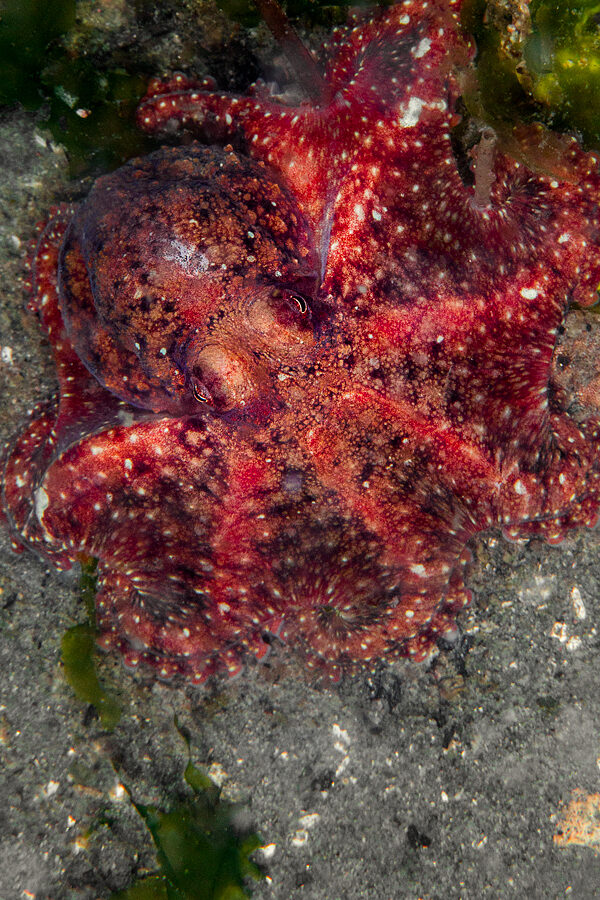
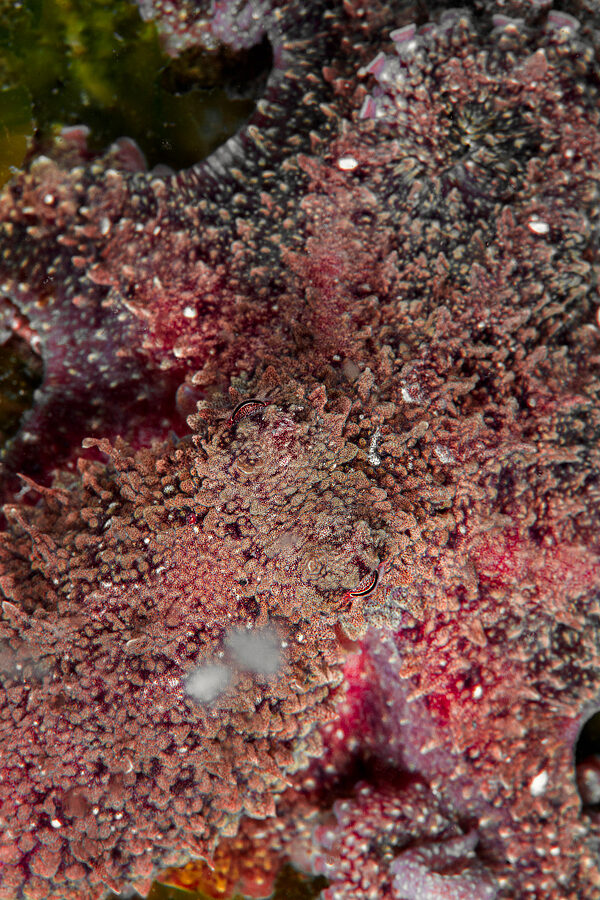
Redondo Beach, Des Moines, WA. It's amazing how octopus can change their texture and color within a matter of seconds! Dive buddy Dave Stucki.
Notes from the field in Seattle: technology, the water, the kitchen, and the kids.
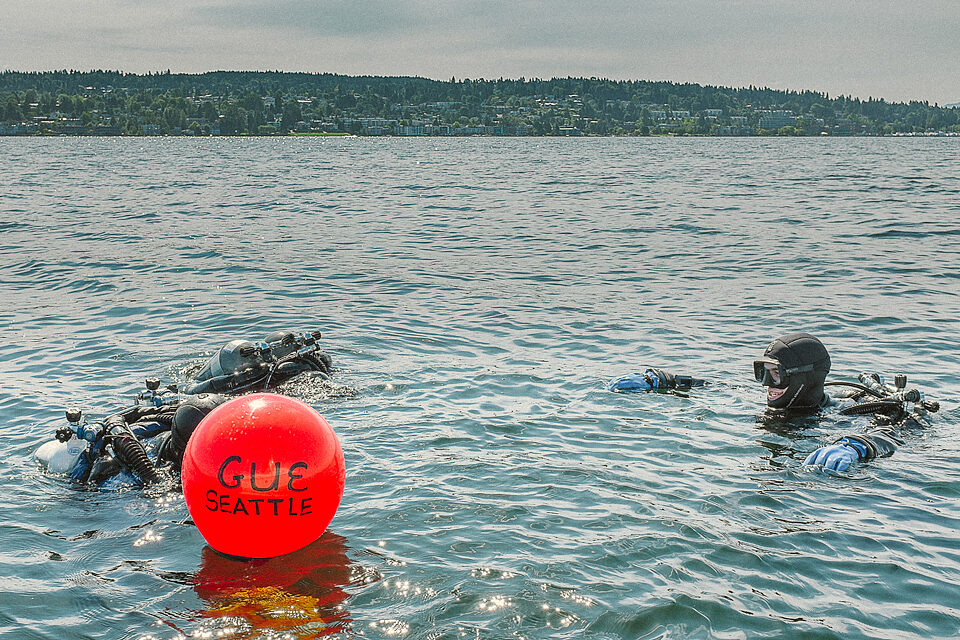
Seattle, WA. GUE Seattle Divers exploring two unknown targets in Lake Washington.
Redondo Beach, Des Moines, WA. It's amazing how octopus can change their texture and color within a matter of seconds! Dive buddy Dave Stucki.
Seattle, WA.
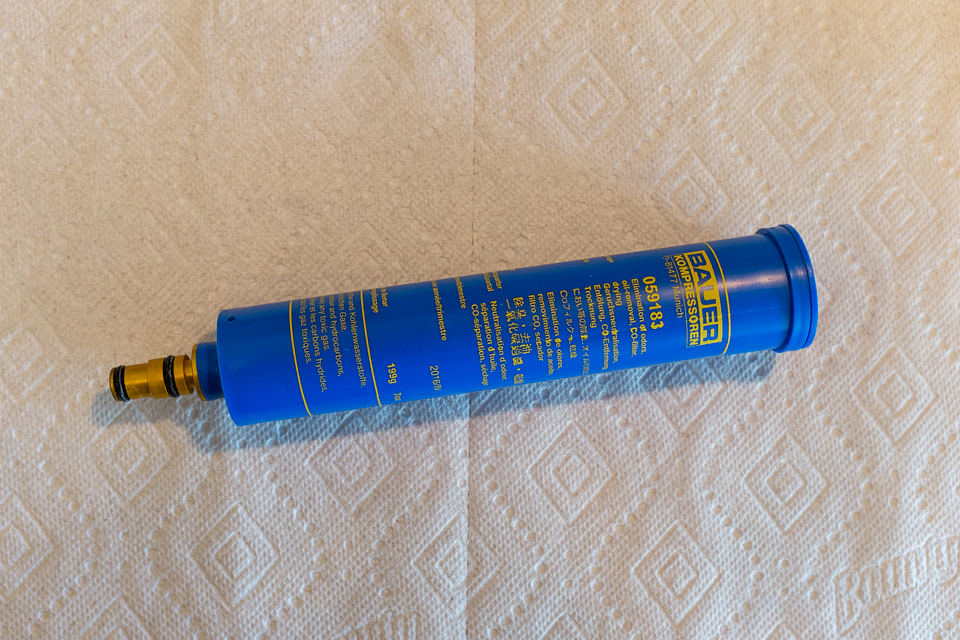
The BAUER Oceanus Compressor comes factory installed with a P21 Triplex Air Purification System. It is also sometimes referred to as the P0. This filtration system is capable of filtering 3,200 cubic feet under normal operating conditions. BAUER guarantee’s that if you use original BAUER cartridges, under normal operating conditions, your compressed air will be free of oil, humidity, and/or hydrocarbons. In this post we’ll take a look at what’s inside one of the filter cartridges.
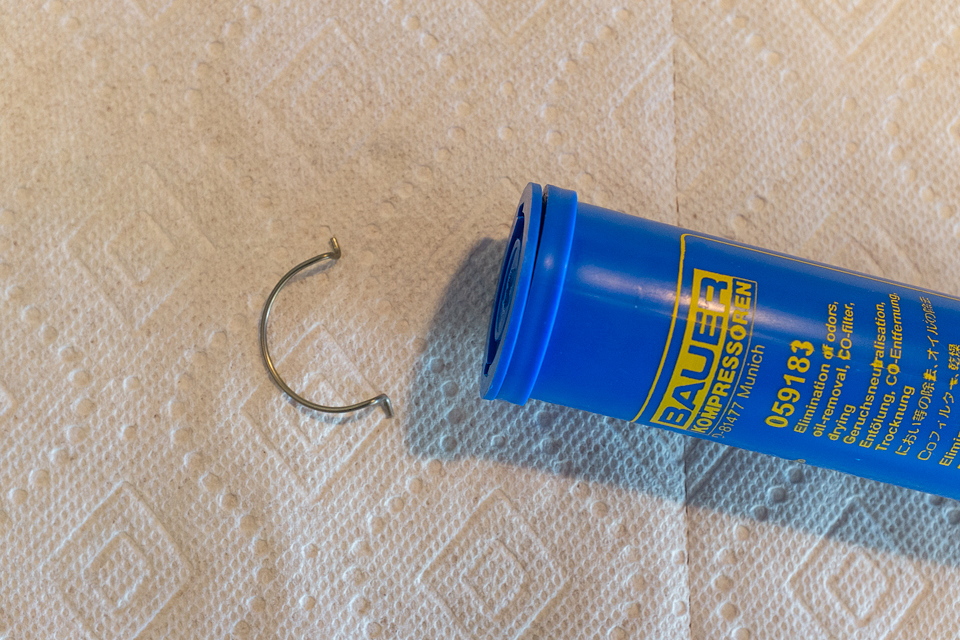
In the photo above you'll see the flip up ring that you use to remove the filter cartridge from the filter tower. It also secures the entire filter assembly together.
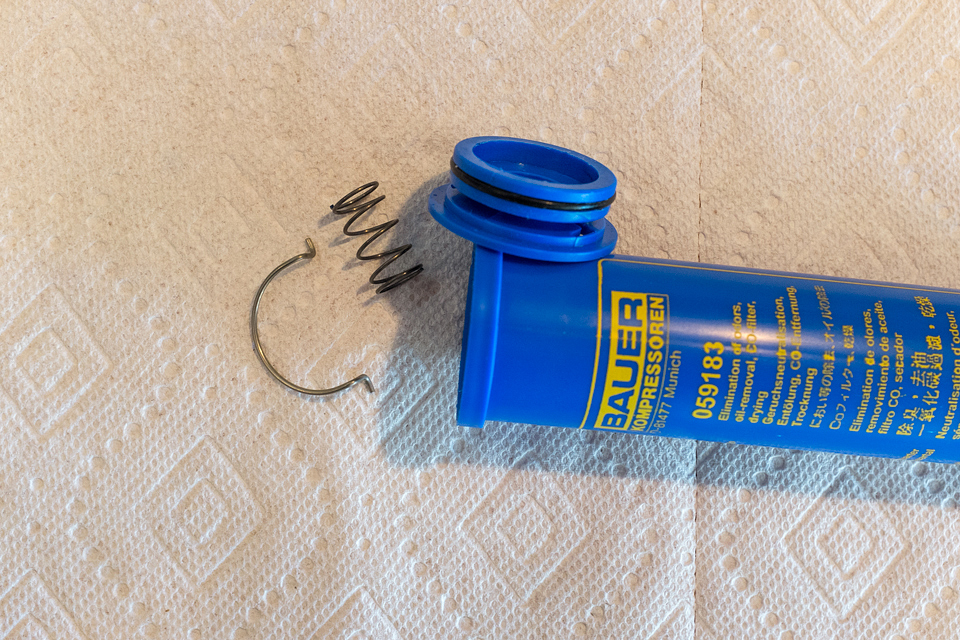
In this photo the filter cap and spring is removed. Notice the filter cap has an o-ring. This is used to seal the filter cartridge.
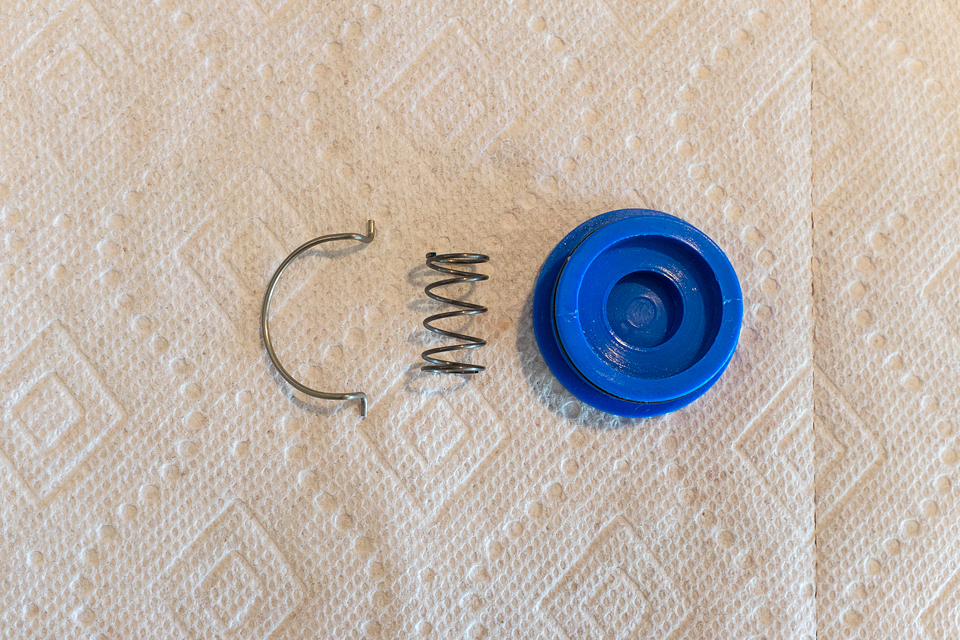
Bottom view of the filter cap.
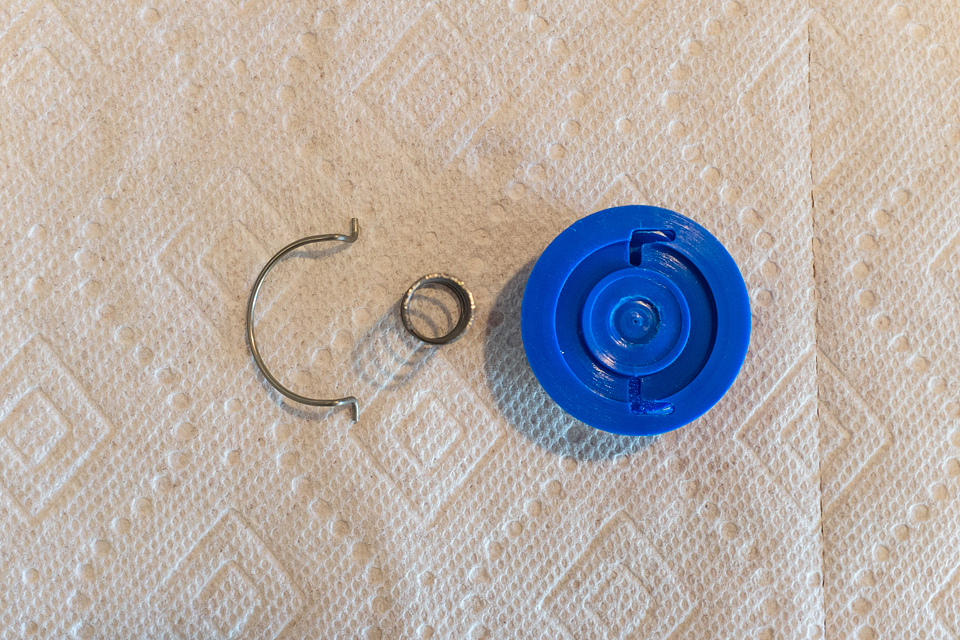
Top view of the filter cap.
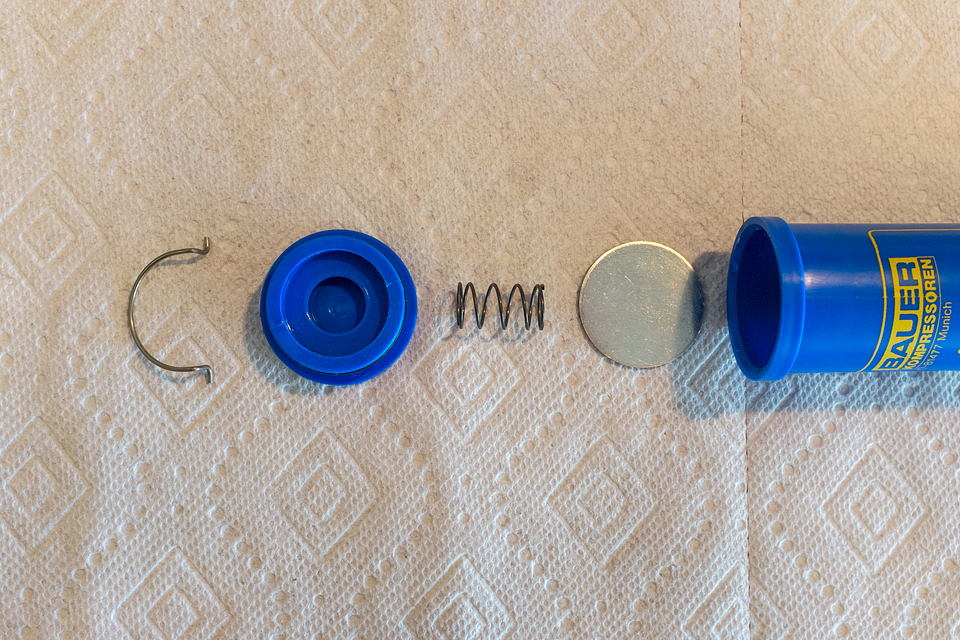
Starting from the right, we have the filter cartridge, metal plate under spring tension that keeps the filter media in place, spring, filter cap, and retaining ring that keeps the filter locked together and eases filter removal from the filter tower.
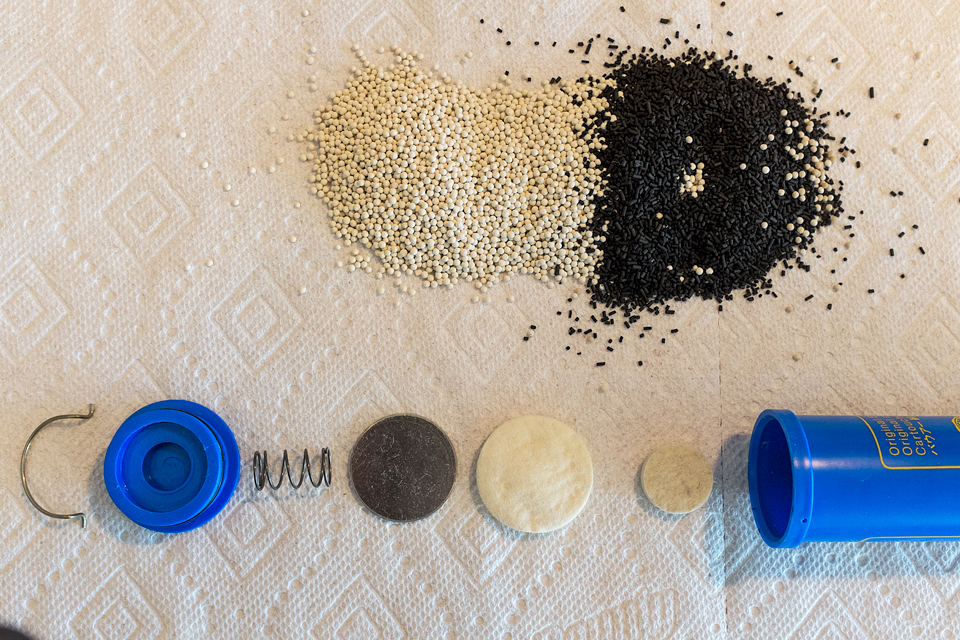
Inside the filter body is a tube. The inner tube houses the hopcalite (black cylindrical media) which is used as a catalyst to remove carbon monoxide. Sandwiched between the inner tube and filter body is the molecular sieve (white media). This material is comprised of very small holes of precise and uniform size. It will remove any remaining moisture from the compressed air. Filter pads go between the media.
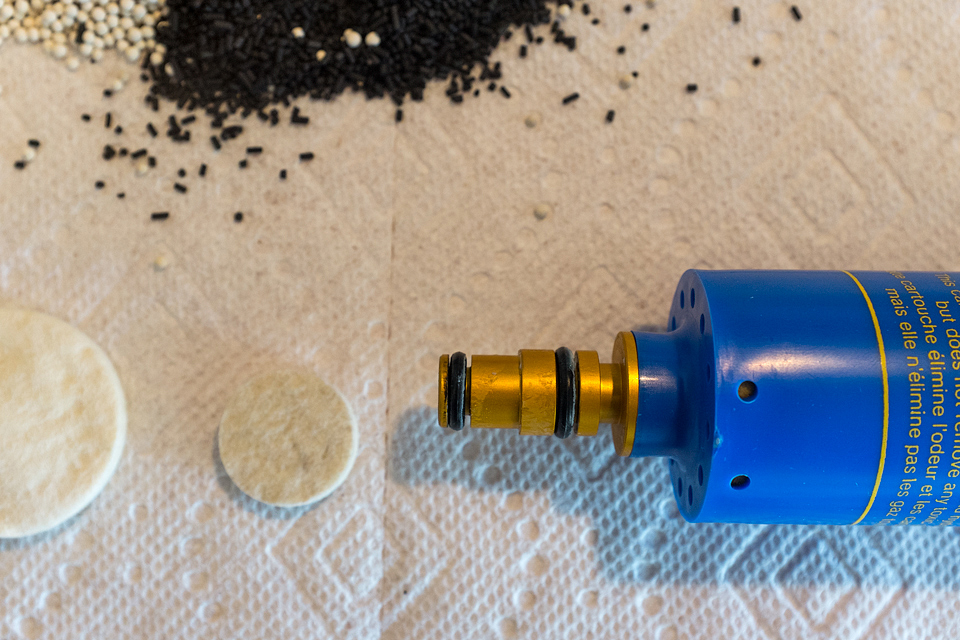
Compressed air flows into the holes located at the base of the blue plastic body and flows through the molecular sieve. The compressed air then makes a 180 degree turn and goes through the hopcalite, activated carbon, and out the aluminum nozzle shown in the photo.
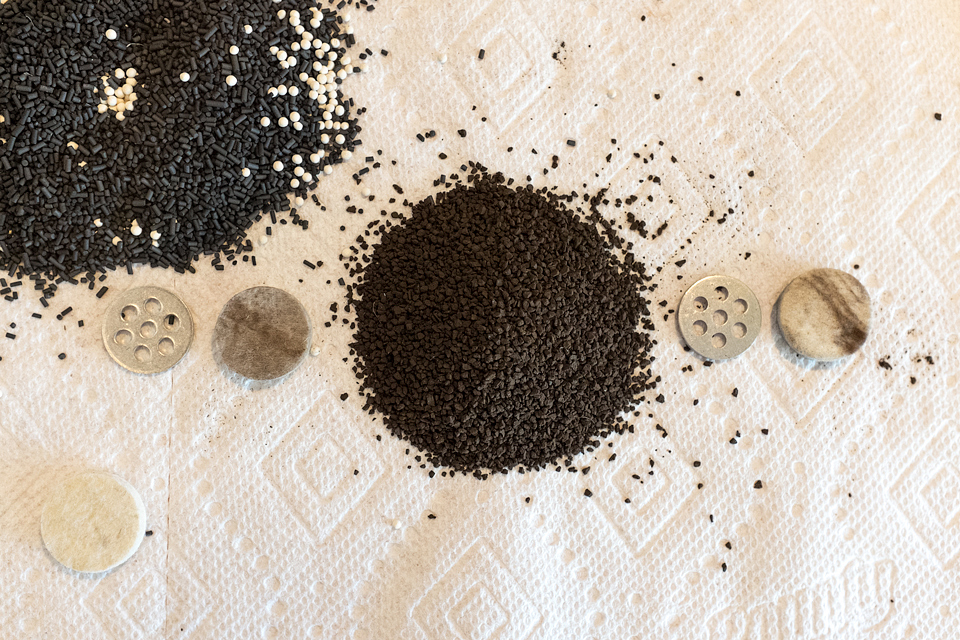
This image shows the activated carbon. To summarize here's how the compressed air flows through the entire filter assembly.
1. Inlet holes located at the base of the filter body.
2. Filter pad (not shown). It's shaped like a washer and I didn't have a tool long enough to remove it from the filter body.
3. Molecular sieve
4. Filter pad
5. Hopcalite
6. Filter pad
7. Metal support
8. Activated carbon
9. Filter Pad
10. Metal support
11. Aluminum nozzle
Seattle, WA.
I was surprised to learn that my Bauer Oceanus Compressor didn’t ship with a switch or means of turning the compressor on and off. As a matter of fact it doesn’t even come with a plug! In order to get the compressor online I decided to opt for a motor starter instead of the knife switch suggested by Bauer Compressors. Below are the items I needed to complete the project.
*SOW Cable with 240 Volt Single Phase Plug.
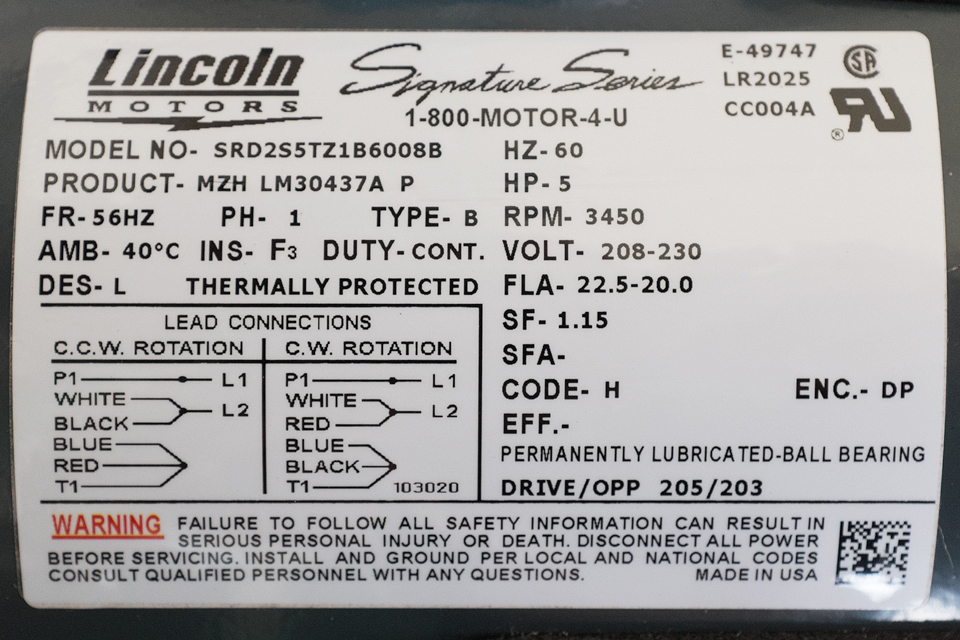
The Bauer Oceanus Compressor came factory installed with a Signature Series 240 Volt Single Phase Motor manufactured by Lincoln Motors (Model Number: SRD2S5TZ1B6008B). According to the placard the Full Load Amperes (FLA) was 20.0 to 22.5 amps.
I decided to go with the Definite Purpose Control Series by Square D.
*Starter, Class 8911 Types DPSG32 (NEMA Type 1 Enclosed)
**2-Pole Single Phase
**30 Full Load Amperes
**5 Horsepower Rating at 230 Volts
**1 Thermal Unit
*Start-Stop Push Button Kit (8911DPB1)
In order to get the start-stop push button kit to work I’d need a set of auxiliary contacts.
*Auxiliary Contact Class 9999 Type - 1 N.O. (DD10)
And to protect the motor one thermal unit.
*B 32
Works like a champ! Thanks to Koos Du Preez for his help with component selection and troubleshooting. Koos recently helped develop a Global Underwater Explorers (GUE) Gas Blender Course. If you would like to learn more about this topic I highly recommend taking his class.
Koos du Preez
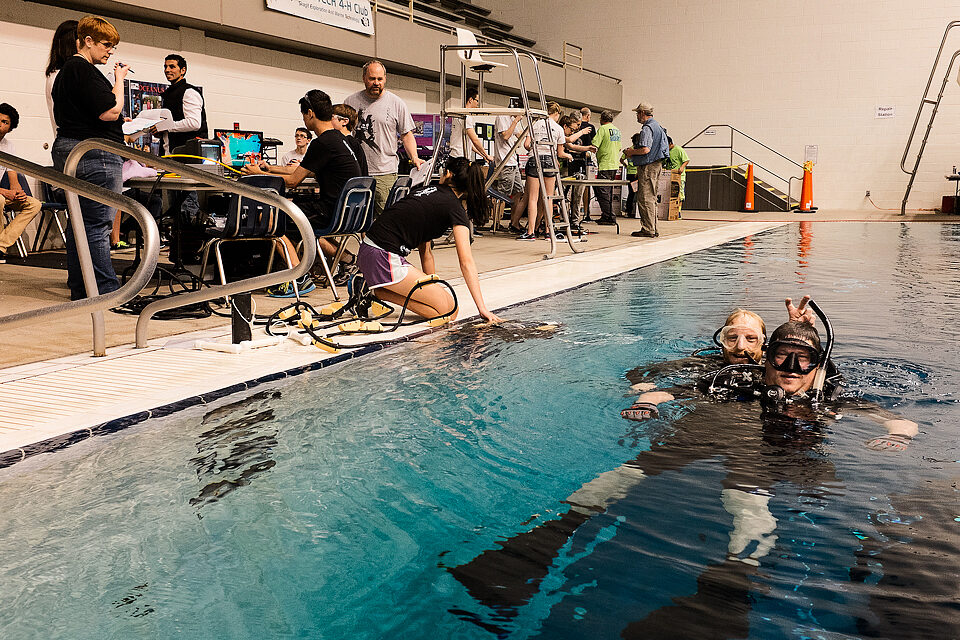
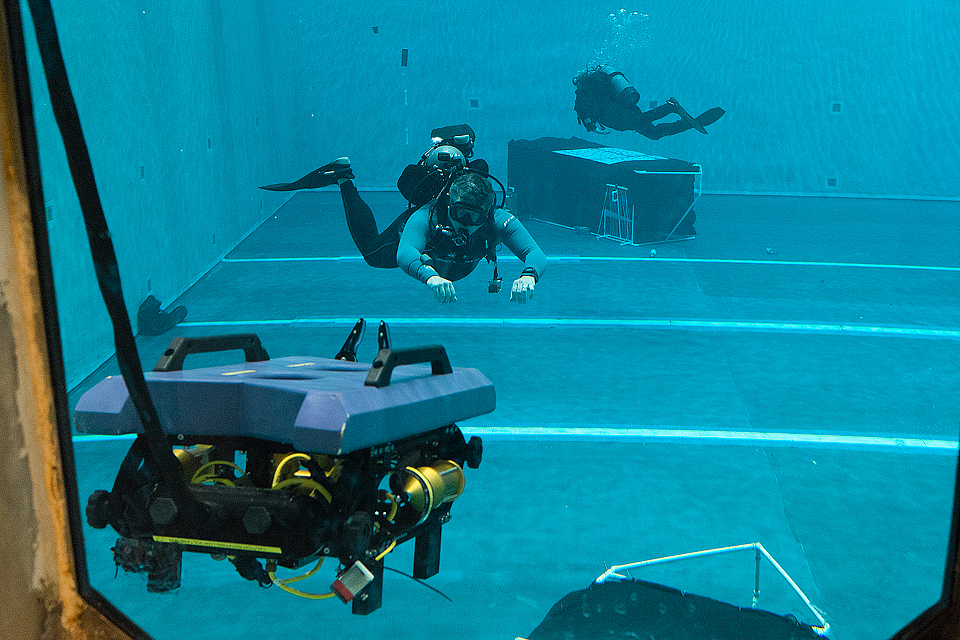
Seattle, WA. The MATE competition challenges students from around the world to design and build remotely operated vehicles known as ROV's. Above, GUE Divers Mike Bearda and Larry McLean are between events as the next team readies deployment of their ROV. Below, GUE Diver Jeremy Freestone watches from a distance as the competition is underway. The students are judged on the ability to complete a specific list of tasks and challenges. The divers assist the ROV's if needed and reset the obstacle course between events.
GUE Seattle
MATE